How to Charge $5K for a Website While Your Costs Stay Under $1K
There's a conversation that happens in every freelance designer's head around 11 PM, three weeks into a project that should've taken two.
You're tweaking the hero section for the fourth time because the client "just wants to see one more option." Your hourly rate—the one you confidently quoted—has quietly dissolved into something that would make you cringe if you actually calculated it. And you've got two more projects waiting that you haven't even started.
This is the moment where you realize: the traditional way of freelancing doesn't scale. You can only sell a certain number of hours. You can only juggle so many clients. And no matter how fast you design, there's a ceiling you'll hit where adding one more project means sacrificing sleep, sanity, or quality.
But here's what most freelancers don't realize: the designers making serious money aren't working more hours than you. They've just figured out a completely different game.
What Actually Makes You Money (And What Just Fills Time)
Here's the uncomfortable truth about client projects: not all hours are equally valuable.
When a client hires you for a $5,000 website, they're not paying you to spend twelve hours building a contact form scratch. They're paying you for the strategic thinking—understanding their business, positioning their brand, crafting their message, and delivering a website that actually converts visitors into customers.
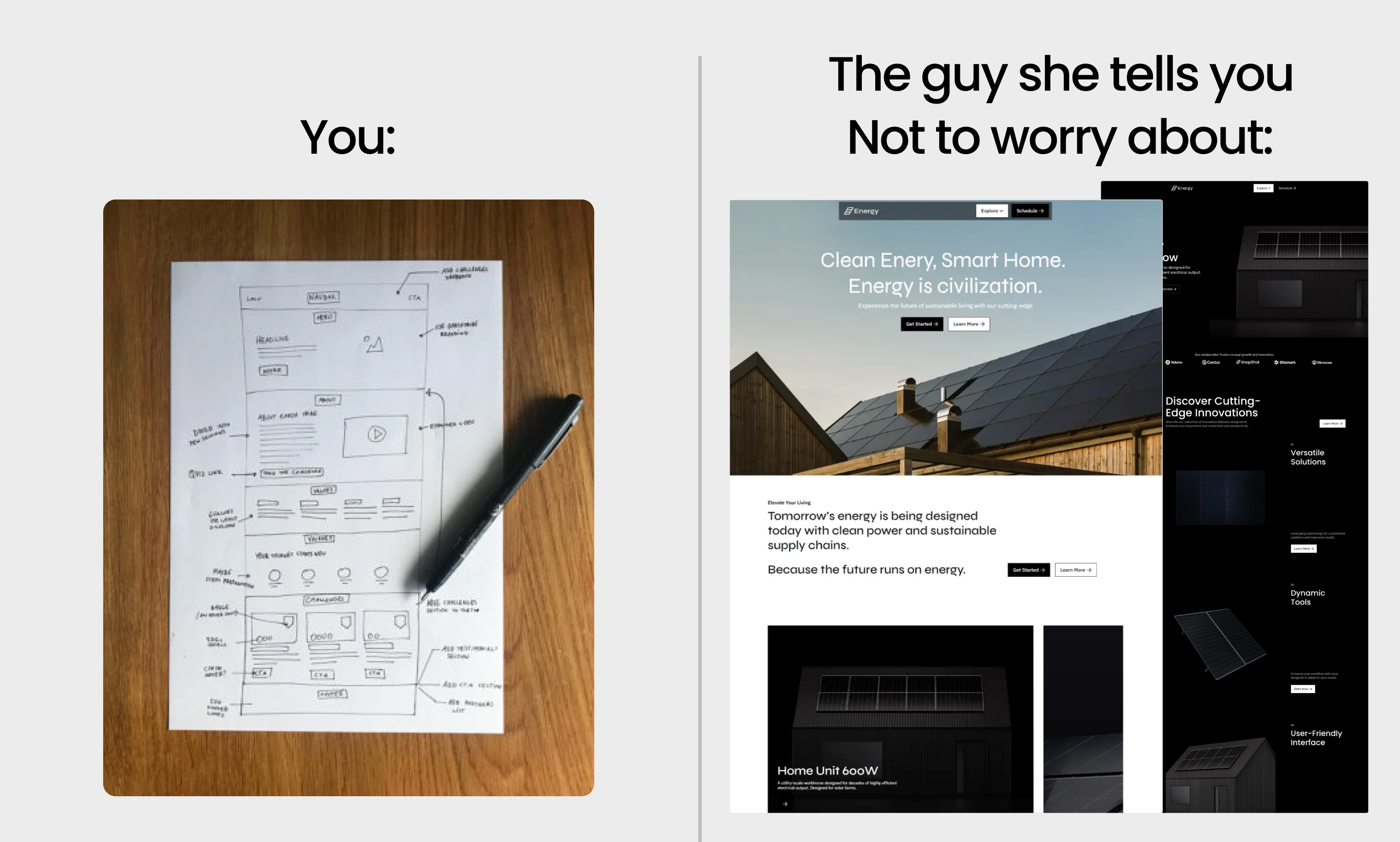
But if you're spending 60-70 hours on a project and half of that time is building structural components that exist in nearly identical form across hundreds of successful websites, you're not maximizing your value. You're just... busy.
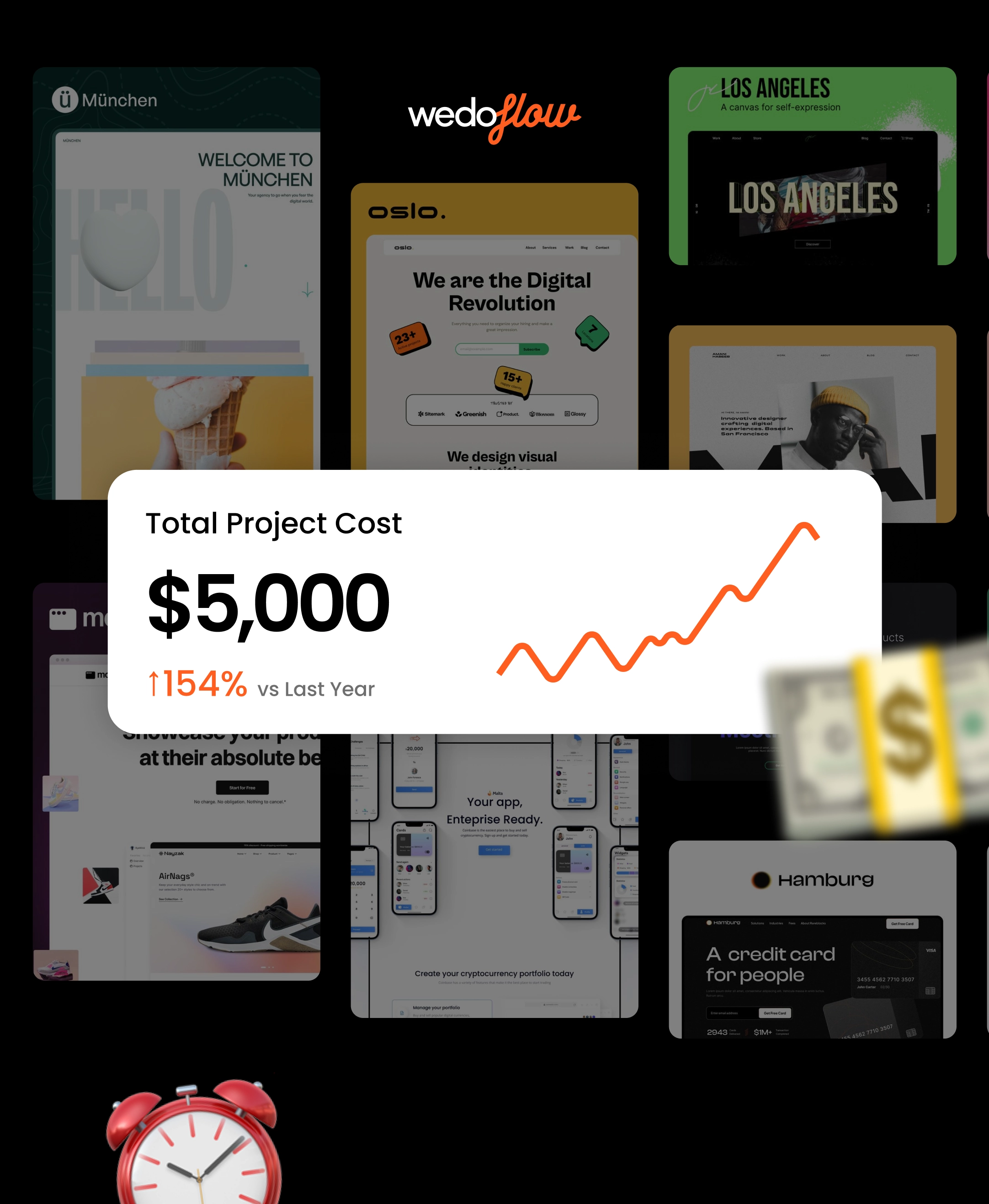
Think about it this way: if you charge $5,000 for a project and invest 65 hours into it, your effective hourly rate is about $77. Not terrible, but also not great when you factor in all the unbillable time—proposals, emails, revisions, project management overhead.
Now imagine the same $5,000 project, but you're only investing 20 hours because you're starting from a solid Webflow template foundation instead of a blank canvas. Suddenly, your effective rate is $250/hour. Same profit. Same client satisfaction. Completely different business model.
That's the arbitrage.
You're essentially buying back your time at an absurdly profitable rate. Spend $600-700 on a comprehensive template library, save 40+ hours per project, and pocket the difference. Do this across multiple projects, and you're looking at tens of thousands in additional annual revenue—not from working more, but from working smarter.
The Pattern Recognition That Changes Everything
Once you start looking for it, you'll see the same patterns everywhere.
Every freelance photographer needs a portfolio site with a stunning image gallery, an about page that builds trust, and a contact form that makes booking easy. The specifics change—the photos, the bio, the pricing structure—but the foundation is universal.
Every startup launching a SaaS product needs a landing page that clearly communicates what they do, why it matters, and how much it costs. They need testimonials to build credibility, feature sections to demonstrate value, and a signup flow to capture leads. These aren't unique problems requiring custom solutions every single time. They've solved problems with proven design patterns that work.
The custom work—the work that actually justifies your expertise—comes in understanding your specific client's unique position in their market, crafting messaging that resonates with their specific audience, and adapting the design system to reflect their brand personality. That's where your value lives. That's what clients are really paying for.
The structure underneath? That's infrastructure. And infrastructure should be reliable, proven, and reusable.
How This Plays Out In Real Client Work
Let us walk you through what this actually looks like in practice.
A UX designer reaches out to you. She's been freelancing for three years, has a solid portfolio of work, but her current website is outdated, and she's losing potential agency contracts because of it. She needs a professional portfolio site that showcases her case studies and positions her as a strategic thinker, not just a visual designer.
Thoe old approach would have you starting from scratch. You'd spend days wireframing different homepage concepts, exploring various case study layout options, building cmponent libraries, and wrestling with responsive design challenges you've solved a dozen times before. By the time you've built, revised, and launched the site, you've invested 60+ hours, and you're exhausted.
The new approach starts differently.
You already know what works for portfolio sites because you've built them before and you understand the patterns. You browse your template library—specifically your Webflow portfolio templates—and find a foundation that matches the strategic direction you discussed with the client. It's got a strong hero section, flexible case study layouts, an about page structure that tells a story, and all the technical foundations already in place.
Total time invested? Maybe 20 hours. The site looks custom because you've tailored every piece of content and branding. The client is thrilled because it's delivered faster than expected and looks incredibly professional. And you've just earned $250/hour instead of $80/hour.
Why Smart Designers Are Building Template Libraries Right Now
Many Webflow freelancers who are scaling and who are consistently landing better clients, charging higher rates, and actually enjoying their work have all made the same strategic shift. They've stopped treating every project as a blank canvas challenge and started building systems.
They maintain a library of Webflow templates covering the most common project types they encounter: portfolio sites, agency websites, SaaS landing pages, blog templates, and e-commerce foundations. When a new client project comes in, they're not starting from zero. They're starting from a professional, tested foundation that they can customize to fit the specific client's needs.
This isn't about getting lazy or cutting corners. It's about being strategic with your time and energy. Think about how software companies work. They don't rebuild their entire codebase for every new feature. They use frameworks, libraries, and design systems that let them move fast while maintaining quality. They understand that sustainable growth comes from leverage, not just grinding harder.
Freelance designers are finally catching on to this same principle. Your template library is your design system. Your reusable components are your framework. And the time you save is what lets you scale without burning out.
The Investment That Pays For Itself Immediately
A comprehensive template library, the kind that covers portfolio sites, agency websites, SaaS templates, blog layouts, and more, costs somewhere around $600-900 if you're buying quality, professionally designed Webflow templates with commercial licensing.
Your first client project using those templates saves you about 40 hours of work. At even a modest $75/hour, that's $3,000 in saved time. Your return on investment happens before you finish your first project.
By your third project, you've saved 120 hours, nearly three full weeks of work. That time you can use to take on additional clients, raise your rates, invest in marketing, or just have an actual weekend for once. Over a year, if you're doing even just one project per month using templates, you're saving roughly 480 hours. That's twelve full work weeks you're buying back. What could you do with twelve extra weeks?
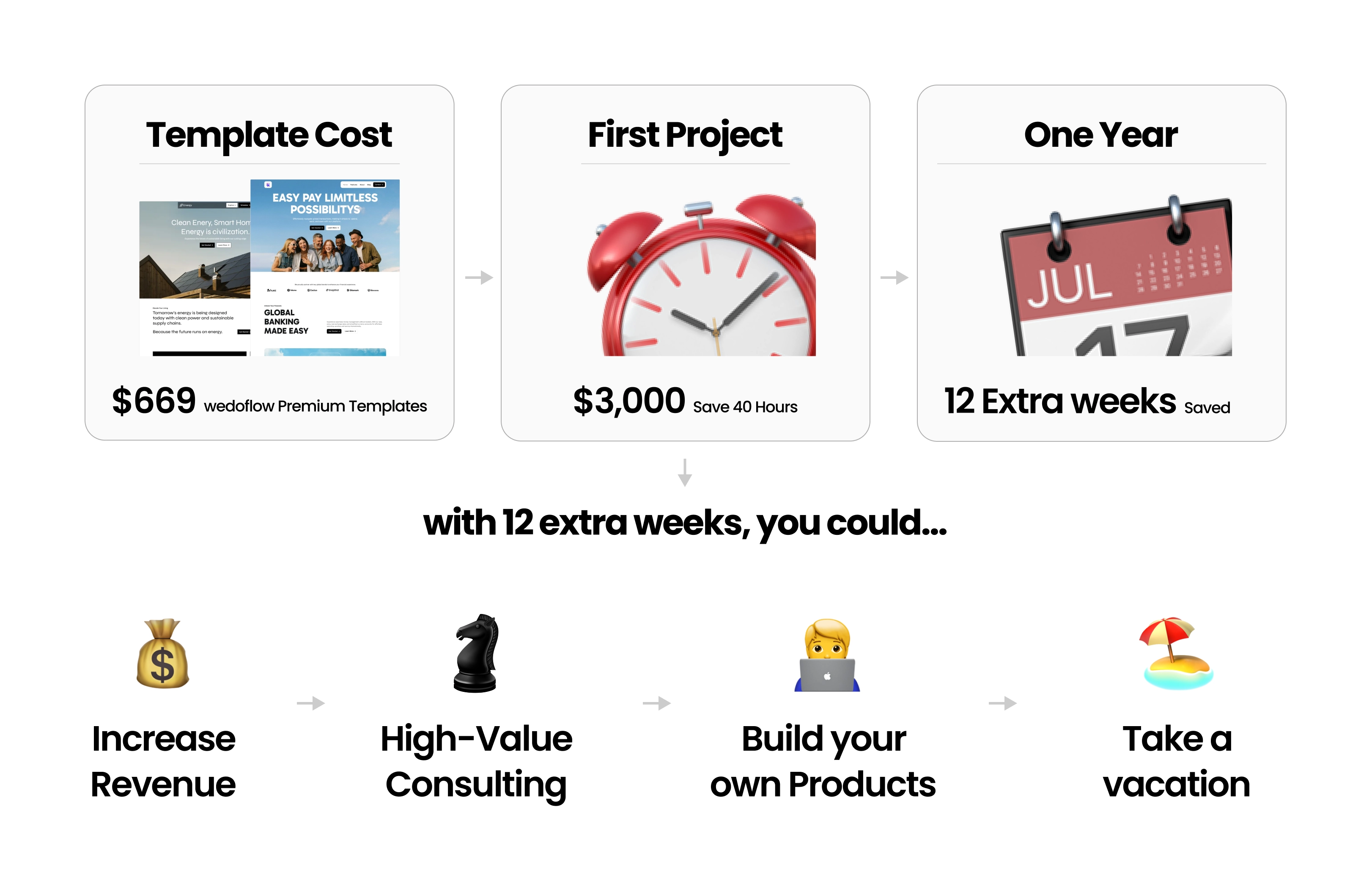
Take on more projects and increase revenue by 50-70%. Focus on high-value strategic consulting instead of pixel-pushing. Build your own products. Actually, take a vacation without your laptop. The template investment isn't an expense. It's leverage. It's buying back your most valuable resource—time—at an incredible discount.
What Makes Wedoflow Different
You don't need one perfect template for one perfect project. You need a comprehensive library that covers the range of projects you actually encounter. You need Webflow agency templates, portfolio designs, SaaS landing pages, and blog layouts—all designed to work together as a cohesive system.
And you need them to be customizable without requiring a PhD in Webflow. Templates that are well-structured, properly documented, and built with real client work in mind. Not rigid, one-size-fits-all designs that fight you when you try to adapt them, but flexible foundations that expect customization.
That's what we are offering at Wedoflow.
Our template library isn't a collection of pretty designs that look good in screenshots but fall apart when you actually try to use them. Every template is built by designers who've done hundreds of client projects. We know which structures work because we've tested them. We know which components you'll need because we've needed them ourselves.
We focused specifically on the most common project types freelancers and agencies encounter: Webflow portfolio templates for creatives, SaaS templates for startups, blog templates for content businesses, and agency sites for service companies. Each one is built with conversion in mind, not just aesthetics.
What This Could Look Like For a Webflow Designer Like You
Imagine your next project coming in. A client needs a portfolio site—something you've built a dozen times before, but that always seems to take longer than it should.
Instead of the familiar dread of starting from zero, you open your template library. Within twenty minutes, you've identified the perfect Webflow portfolio template foundation. It's got the structure, the components, and the technical foundation all in place.
You spend a few hours customizing the branding—typography, colors, imagery that matches their personality. You populate their case studies using the Webflow CMS, tweaking the layout to best showcase their specific work. You refine the about page to tell their story and position them exactly how they want to be perceived.
Four days later, instead of three weeks, you're sending them the preview link. They're thrilled. You're not exhausted. And you've just cleared space to take on two more projects this month that you would've had to turn down under the old model.
That's not a fantasy scenario. That's just using the right tools for the job.
This is what Wedoflow is built for: helping freelancers and small design agencies deliver exceptional work faster, more profitably, and more sustainably. Because you shouldn't have to choose between quality and sanity.


-76d50c8c322d.jpg)